
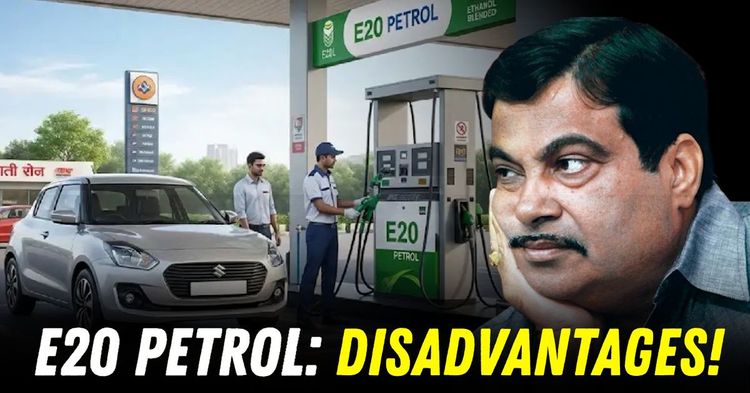

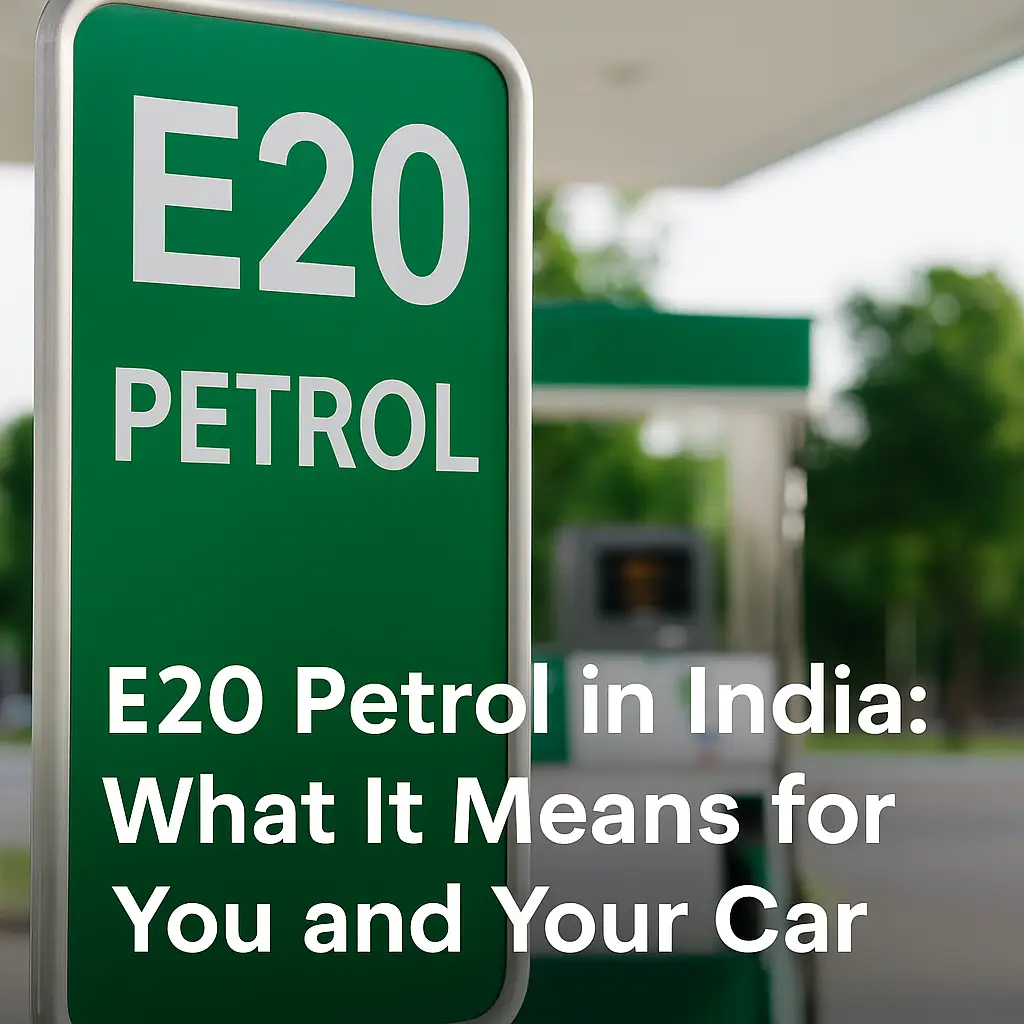
On 15th August 2023, India quietly started a fuel revolution. It wasn’t a flashy electric car launch or a new SUV—it was a new type of petrol. The name? E20 Petrol.
Now, I know what you’re thinking: “Fuel is fuel. Why should I care?”
Well, here’s the thing—this isn’t just another grade of petrol. It’s something that could affect your car’s performance, your monthly fuel bill, and even the environment you breathe in.
Let’s break it down, no jargon, no fluff.
🌱 So, What Exactly is E20 Petrol?
E20 is simply 20% ethanol + 80% petrol.
Ethanol is alcohol made from crops like sugarcane, corn, and even rice husk.
We’re already running on E10 (10% ethanol blend), but now the government wants to double it to E20 across India by 2025.
Why?
- To cut our crazy-high oil imports
- To support Indian farmers
- To make fuel a little cleaner
Sounds good, right? But here’s the catch our cars have to be ready for it.
🛞 Will My Car Drink E20 Without Complaints?
Here’s the simple rule:
- New cars (after April 2023) → Most are already E20-friendly. Automakers like Maruti, Hyundai, Tata, and Honda are building engines that can happily run on it.
- Older cars (before 2023) → Might not like it much. Think of it like giving strong coffee to someone who’s used to mild tea some will handle it, some won’t.
👉 Quick hack: Check your car’s fuel cap or user manual. If you see “E20” written, you’re good.
⛽ Where Can You Actually Buy E20 Petrol?
Right now, not everywhere.
A few pumps in Delhi, Bangalore, Pune, Chennai, and a handful of other cities have started selling it. By 2025, the plan is to roll it out across India.
So, don’t be surprised if next time the pump guy asks: “Sir, E20 bharu ya normal?”
💸 Is It Cheaper Than Regular Petrol?
Technically, yes. Ethanol is cheaper than petrol, so blending brings the cost down a little.
But-there’s a twist.
Ethanol has less energy, which means your mileage drops a bit.
Example: If your car gives 15 km/l with normal petrol, with E20 it might drop to 13.5–14 km/l.
So the price difference and the mileage loss kind of balance each other out.
⚡ Will E20 Make My Car Sluggish?
Not really.
- If your car is E20-ready, you might actually notice a smoother drive because ethanol burns cleaner.
- If your car isn’t built for it, you could face minor issues over time-like engine knocking, harder cold starts, or fuel line corrosion.
It won’t kill your car overnight, but using it daily in a non-compatible car is not recommended.
🔧 What Happens if I Put E20 in My Old Car by Mistake?
Relax, nothing dramatic will happen immediately.
But if you keep doing it regularly, it could:
- Wear out your engine parts faster
- Corrode rubber seals and pipes
- Reduce your engine’s overall life
Think of it like giving junk food daily to someone who isn’t used to it-it won’t show up tomorrow, but it adds up.
🌍 Why is India Pushing E20 So Hard?
Because it’s not just about cars-it’s about the country.
- India spends lakhs of crores on importing oil every year.
- With ethanol, some of that money goes to Indian farmers instead of oil companies abroad.
- Plus, ethanol cuts down on emissions, which means cleaner air in cities.
It’s basically India saying: “Let’s grow our own fuel.”
🏭 Which Cars Are Already E20-Ready?
Most new launches in 2023–24 are tuned for it. A few examples:
- Maruti Suzuki: Baleno, Swift, Brezza, Grand Vitara
- Hyundai: Creta, Venue, i20
- Honda: City, Elevate
- Toyota: Hyryder, Innova Hycross
- Tata Motors: Nexon facelift, Altroz
By 2025, you can expect almost every new car to handle E20 smoothly.
❓ Common Questions I Keep Hearing
Q1. Can I mix normal petrol and E20?
Yep. If your car isn’t ready for E20, just stick to regular petrol when possible. No harm in mixing occasionally.
Q2. Will my scooter run on it?
New two-wheelers from Honda, Hero, Bajaj, and TVS are already moving towards E20. Older ones may struggle.
Q3. Will this make cars more expensive?
Not really. Carmakers are just tweaking engines, so the extra cost is minimal compared to EVs.
Q4. Is this a replacement for EVs?
Nope. Think of E20 as a bridge fuel—something to reduce pollution while EV infrastructure grows.
🚘 Final Thoughts: Should You Be Excited?
Here’s the bottom line:
- If you’re buying a new car → Don’t worry. Most are already E20-ready.
- If you own an older car → Stick to regular petrol for now.
- For the country → It’s a big move toward cleaner and cheaper fuel.
Sure, mileage might dip a little, but on the bigger picture—E20 means less pollution, more money for farmers, and less oil dependence.
So next time you’re at a petrol pump and see “E20” written on the board, you’ll know exactly what it means and whether your car’s ready for it.